



How to choose your grips for CrossFit remains every crossfitter's battleground. If one week your grips seem to “work by themselves” and the next week you feel they don't hold at all, it's not magic: the bar has changed.
Learning to read its condition —cleanliness, texture and humidity— is worth more than changing grip models every month.
What almost nobody considers: the bar dictates
Think of the bar as the road your grip “rolls” on. There are days of perfectly dry asphalt (clean bar), and days of gravel, puddles and dust (bar loaded with chalk, humidity, aggressive textures). If you drive the same car on both, the experience changes a lot; with grips it's exactly the same.
In CrossFit we contend with three variables that alter the contact:
- Cleanliness: clean bar vs bar with accumulated chalk.
- Texture: smooth bar vs rough bar (marked knurling).
- Humidity: sweat on the hands or a film of moisture on the steel.
When those three things are on your side, the grip becomes predictable; when they're not, you get “it slips on me”, “it hooks weird” or “my hand is burning”.
Clean bar vs bar “loaded” with chalk
A clean bar is like a freshly washed window. The grip rests directly on the metal, the material responds the same on rep 1 as on rep 15 and there are no surprises. If you train in a box where you can choose the bar or clean the one you're assigned, you'll immediately notice that sets flow better and you barely need to “re-grip”.
Velites recommendation
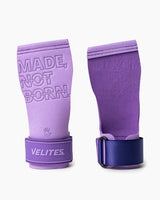
- Clean and predictable bar → Velites Quad Ultra. Maximum grip without chalk and good protection to chain repetitions without “re-gripping”.
- Box with usually clean bars but sometimes messy? → Velites Quad All Terrain. Maintains very consistent performance when the environment varies a bit.
A bar with accumulated chalk, on the other hand, adds a layer between the grip and the metal. That film changes the friction: sometimes it “sticks” too much and surprises you on release; other times the layer is compacted and you feel it slip when you start to sweat. It's very common to blame the grip, but 80% of the problem is usually that layer.
Velites recommendation
- Variable environment / bar with chalk from previous heats → Velites Quad All Terrain. Designed to deliver stable performance when the surface changes.
- If you still need chalk because of your sweating or the WOD, consider switching to a system with chalk (Quad Pro - see below).
A real example:
You arrive to the evening class; five heats before you did a lot of toes-to-bar and the bar is “caked”. You hang, do two reps and notice the grip slipping. Quick test: brush for 20 seconds and do two test reps. The feel changes. Same material, same person; you only removed the intermediate layer.
Rough vs smooth: friction and control
The rough bar(more aggressive knurling) offers a lot of “natural grip” because it bites the material more. The downside is wear: if you use the grip with folds or do high volume, that extra friction can “heat” the palm and open a hotspot mid-WOD. On rough bars prioritize two things: protection (cover the actual friction zone) and a flat placement so no fold forms that acts like a “knife”.
Velites recommendation
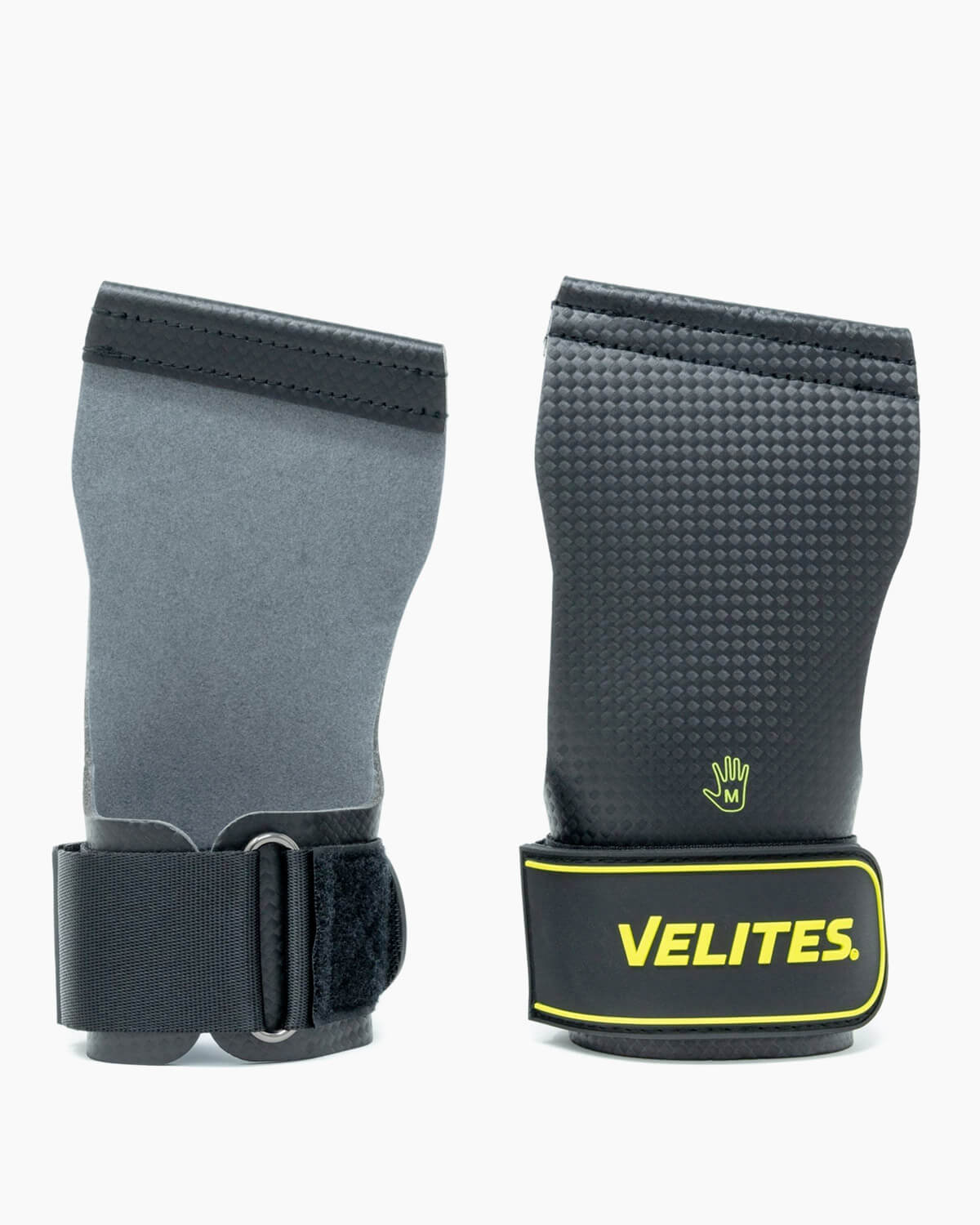
- Rough + use with chalk → Velites Quad Pro (general use with chalk) or Velites Quad Carbon (especially solid feel on rough bars).
- Rough without chalk → If the box allows it and the bar isn't plastered, Quad All Terrain can work well, but prioritize a flat placement and check for folds.
The smooth bar demands more technique and control: wrist angle, kipping timing, where you place the grip when you hang. Here micro-slips are noticeable sooner. If your setup is loose or the grip sits short at the top, you'll be readjusting every two by three. When everything is in place —correct size, firm velcro, dry hand— the feel is very similar to “floating” without surprises.
Velites recommendation
- Smooth and clean, no chalk → Velites Quad Ultra for very consistent grip.
- Smooth with humidity or sweat → Quad All Terrain for stable behavior when the surface changes.
Another example:
Same athlete, two different rigs. On the first, an old rough bar: does chest-to-bar with confidence but leaves with a sensitive palm. On the second, a new smooth bar: nothing hurts, but if they don't close the velcro well and place high, the set slips away on rep 6. It's not better or worse; it's different, and the grip must match the bar's “character”.
Humidity: that small big saboteur
Sweat changes the contact. A damp palm on an also damp bar is like sticking a sticker onto dust: it neither fully sticks nor fully detaches, and at the slightest movement it shifts. Before thinking about changing grips or throwing handfuls of chalk, check the basics:
- Dry your hands and, if you use wrist wraps, prevent them from soaking the palm.
- Don't hang with hands wet from water or from cleaning the floor.
- If the bar is shiny, pass a towel: that film is slippery.
With only that, many sets start to fall into place.
So… which grip do I use in each case?
The idea is that you understand which sensations to look for according to the bar and adjust your choice (and habits) accordingly.
Clean and predictable bar.
Here the no-chalk system shines: a stable, direct and highly repeatable grip across the set. You'll notice fewer “pauses” to re-grip and more time on technique.
Velites Quad Ultra → direct and predictable grip, ideal to chain reps without micro-pauses.
Bar with accumulated chalk, variable environment (peak hours, drop-ins).
If you can't control the bar, look for versatile materials that don't become fickle when the surface changes. And, if you can, a quick brush before the important block.
Velites Quad All Terrain → versatile materials that perform well when the surface varies within the same WOD.
Rough bar (marked knurling) and a high-volume WOD.
Prioritize solid protection and avoid folds. With chalk, think thin layers: plastering the bar usually creates more problems than it solves.
Velites Quad Pro (overall balance) or Velites Quad Carbon (very solid feel on aggressive knurling). Tip: with chalk, thin layer; plastering the bar usually worsens the grip.
Competition or strict regulations:
Velites Quad Competition → designed to minimize compliance issues without losing protection. If the event allows extra grip and the system doesn't matter, decide by environment: clean/variable/rough.
See the VELITES grips comparison:
| Chalk | No chalk | Chalk | No chalk |
| Bar surface | Smooth and knurled bar | Knurled bar | Smooth bar |
| Accessories | Wrist wraps + carry bag | Wrist wraps | Wrist wraps + carry bag |


Small decisions that change everything
- Clean before you change. If the bar is “gross”, clean it for 20–30 seconds and do 2 test reps. Sometimes that is worth more than anything else.
- Don't “plaster” the bar. With chalk, a thin layer that helps manage sweat is better than turning the surface into talc.
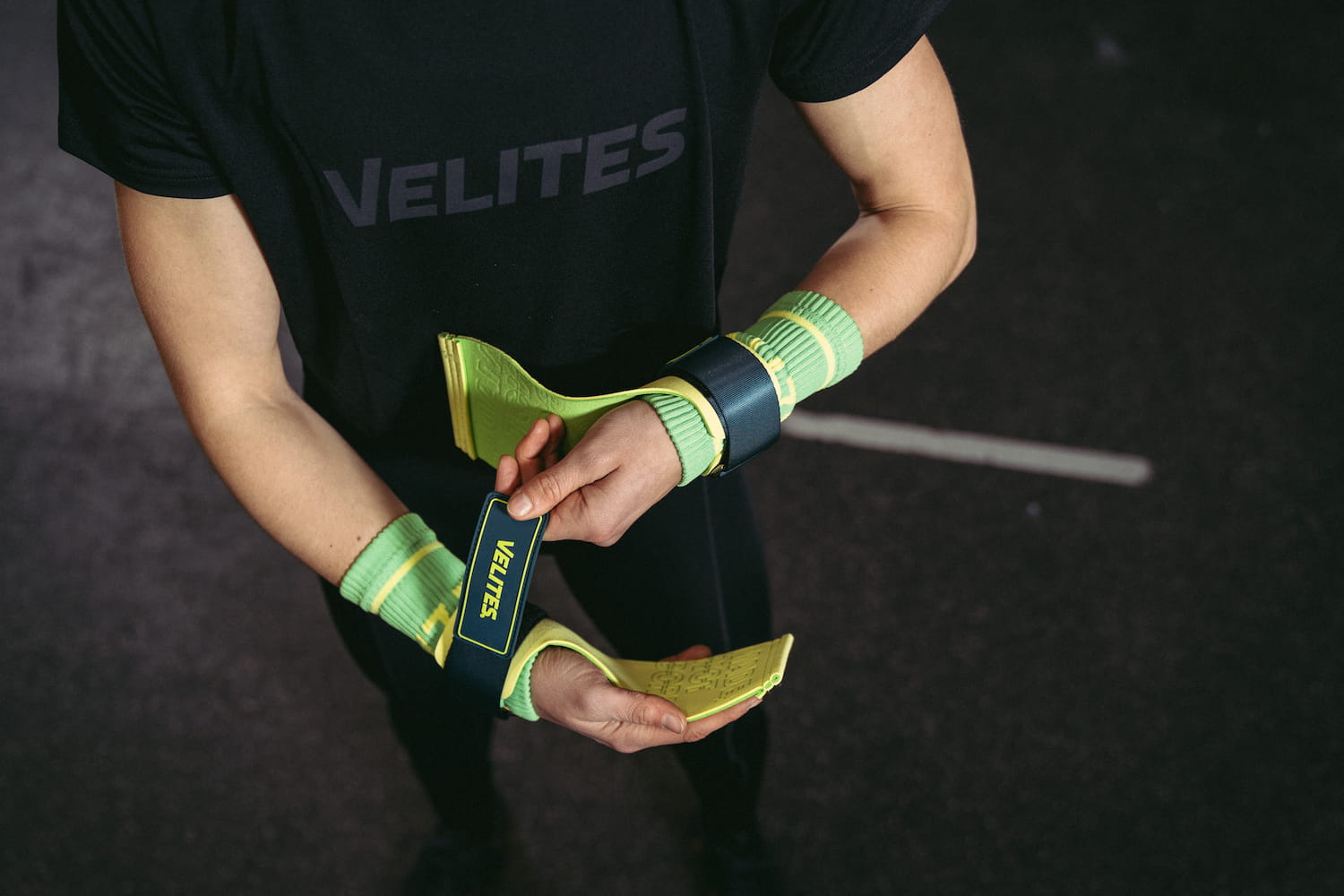
- Place high and tighten with sense. On grips without holes, place them where you actually experience friction (upper part of the palm). Velcro firm, but not stranguled.
- If in doubt about size, go up. A grip that is short at the top leaves skin exposed exactly where it rubs. That missing millimeter is what will burn you later.
A practical case, step by step
Imagine this WOD: 3 rounds of 12 toes-to-bar + 12 ring rows + 300 m run. You arrive at the rig:
- You look at the bar: you see compacted chalk.
- Brush/towel: 20 seconds.
- Hands: dry; wrist wraps in place, not invading the palm.
- Depending on the environment: if the bar ends up clean and stable, Quad Ultra; if it remains variable, All Terrain; if you decide to use chalk because of sweat or texture, Pro or Carbon.
- Test: hang for 8–10 seconds, do two smooth reps to feel the contact.
- Adjustment: if you noticed a fold, reposition and close the velcro one notch more.
- WOD: now the set flows and you don't lose rhythm.
What's important here is not model X or Y, but your control routine: clean–test–adjust. With that habit, any well-chosen grip performs better.
Frequently asked questions
Can I use no-chalk grips even if the bar is loaded?
You can, but it's not ideal. If you can't control the bar, try to clean it; if that's not possible, choose a material that doesn't fall apart when the surface changes.
Why do I get hotspots more on rough bars?
Because there is more friction and any fold becomes a heat point. Place flat, avoid wrinkles and don't stay on an aggressive bar if the WOD doesn't require it.
I fall off sooner on smooth bars, what do I do?
Check size and fit first. Then work on technique: wrist angle, kipping cadence and where the grip sits when you hang. Small changes make a difference.
See no-chalk grips → Ultra / All Terrain
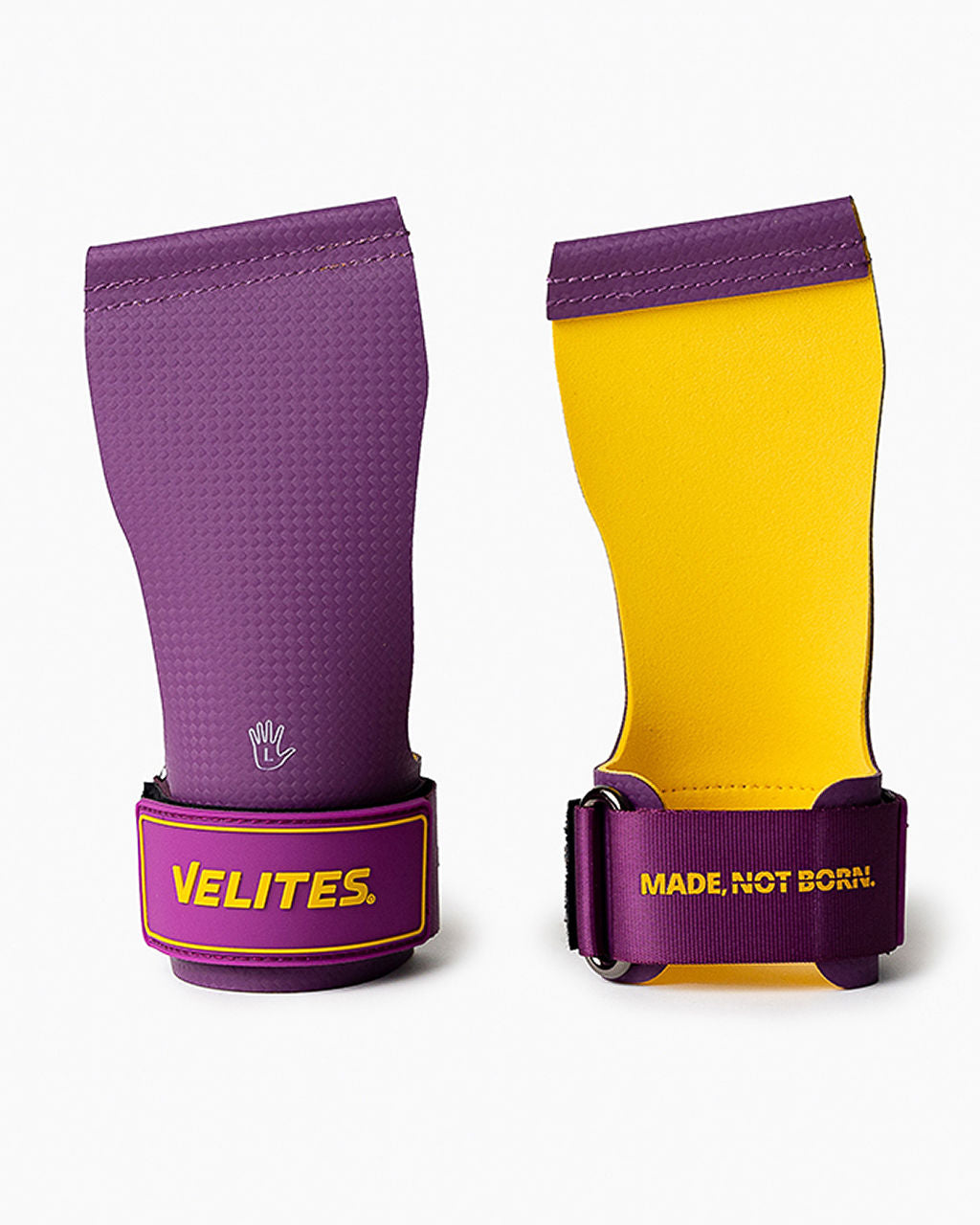
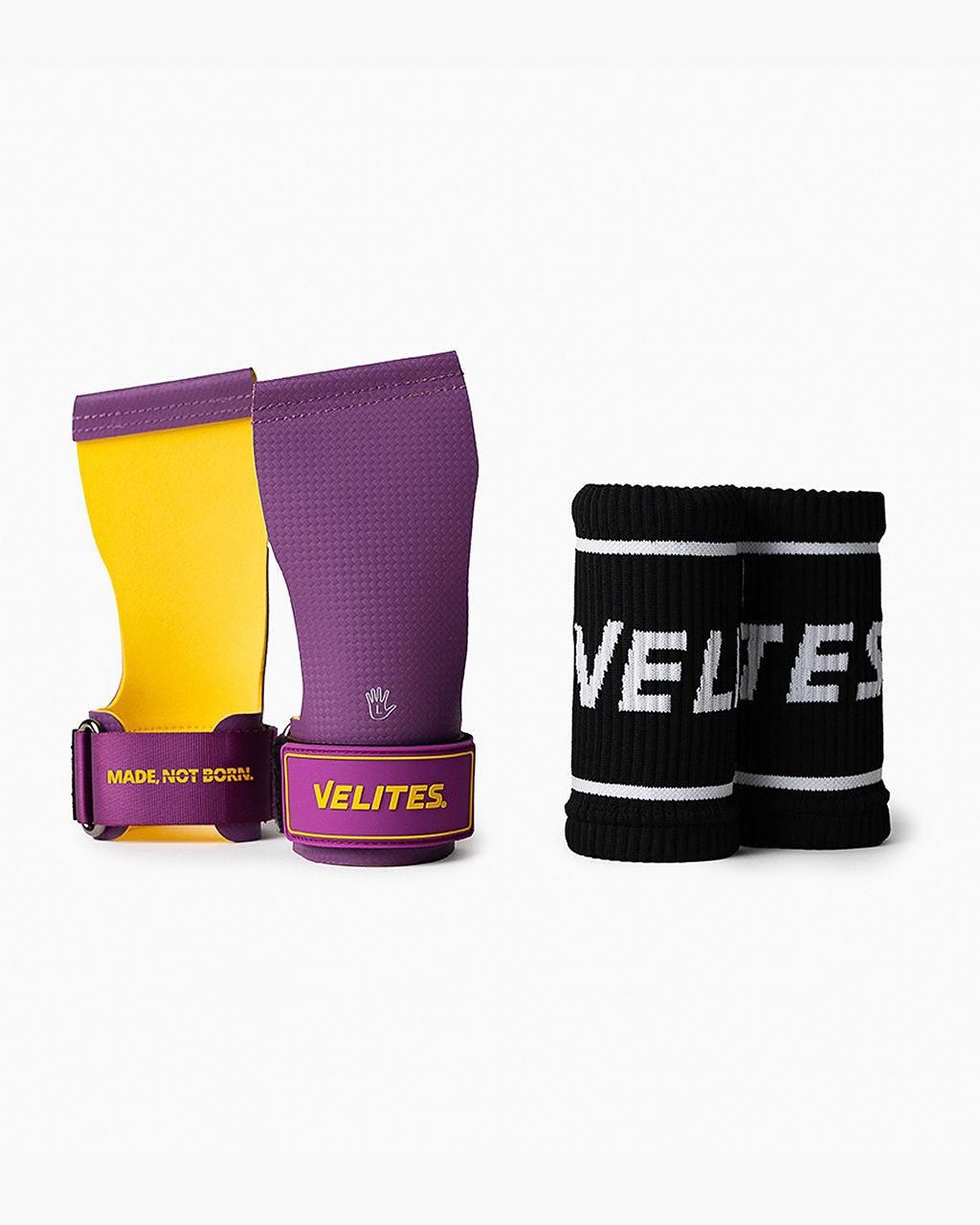
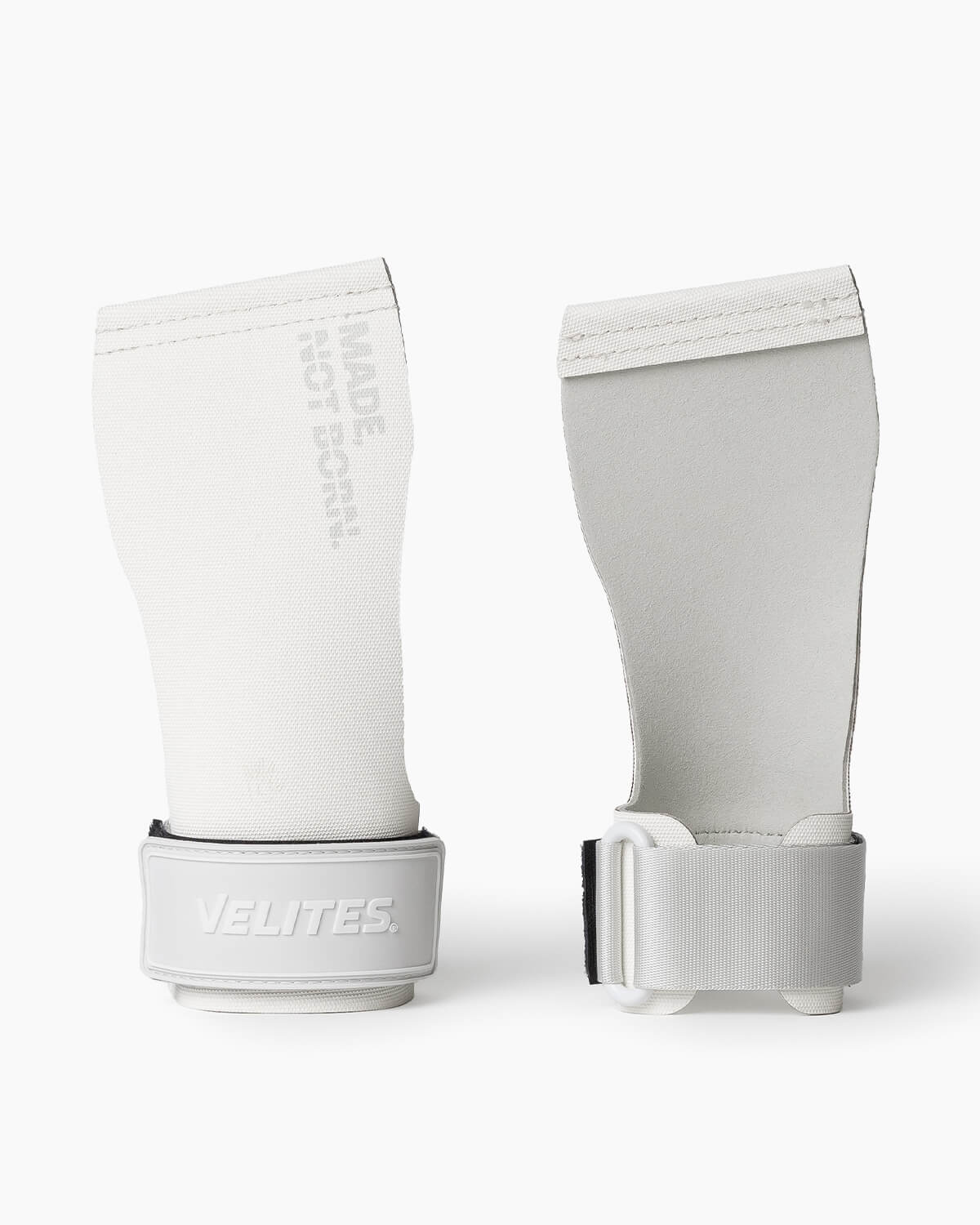
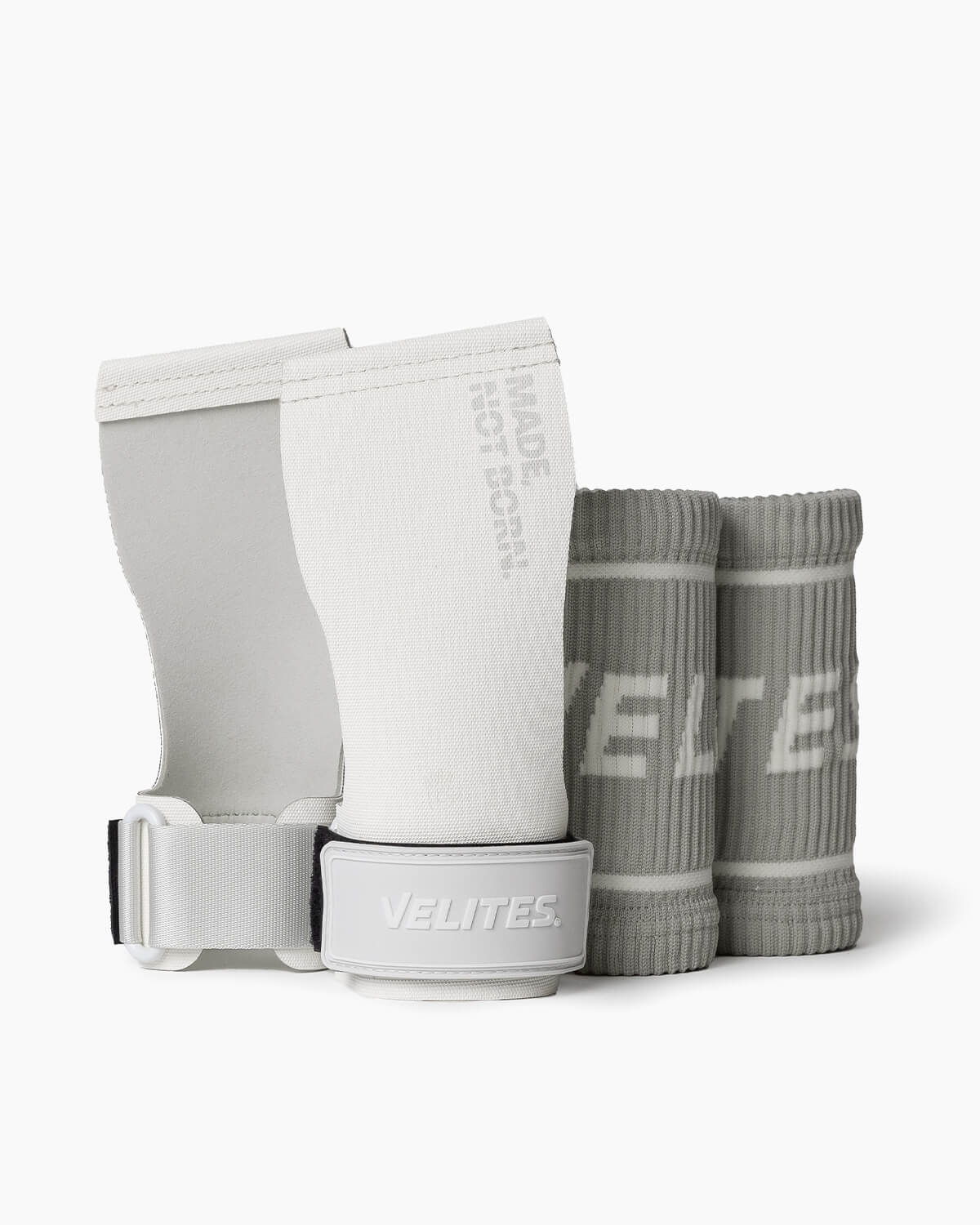
See chalk grips → Pro / Carbon / Competition